
If your business owns its machinery, vehicles or plant outright, there may be cash sitting in your yard rather than in your bank account. Asset refinance in Ayr and across Ayrshire lets a business borrow against equipment it already owns, or sell that equipment to a finance company and lease or buy it back, so the money is released while the kit keeps working. For a haulier in Prestwick, a contractor in Troon or a manufacturer near Kilmarnock, it can be a practical way to fund growth, a large tax bill or a new contract without taking a charge over property.
I spent more than 25 years in accountancy before focusing on commercial finance, and the first thing I look at with any refinance is not the product but the numbers behind it: what the asset is really worth, what the cash is for and how the repayments will be met. This guide explains how asset refinance and sale and leaseback work, what lenders look for and where the risks sit.
What asset refinance in Ayr actually means
Asset refinance is a form of asset finance that starts with equipment you already have, rather than equipment you are about to buy. A lender looks at an asset your business owns, values it and advances a proportion of that value. You repay over an agreed term while carrying on using the asset as normal.
It usually takes one of three shapes:
- Refinance on hire purchase. The finance company buys the asset from your business and sells it back to you on a hire purchase agreement. Ownership returns to your business once the final payment and any option-to-purchase fee are made.
- Sale and leaseback. The finance company buys the asset and leases it back to you. You keep using it, but the lender remains the owner, and what happens at the end of the lease depends on the agreement.
- Capital release on financed assets. Where an asset is already on finance but has been largely paid down, some lenders will settle the existing agreement and advance a new, larger one, releasing the equity built up in the asset.
All three put the equipment to work twice: once in your operations and once as security for funding.
Sale and leaseback equipment versus refinancing on hire purchase
The terms are often used loosely, but the difference matters for your accounts, your tax position and what happens at the end of the agreement.
With refinance on hire purchase, your business is working towards owning the asset again. For capital allowances, HMRC treats the person making hire purchase payments as the owner once they are entitled to the benefit of the contract, so your business can normally continue to claim allowances on it (HMRC Capital Allowances Manual CA23310, checked November 2026).
With a sale and leaseback of equipment, the finance company owns the asset and your business pays rentals. The accounting and tax treatment depends on the type of lease. There are also specific anti-avoidance rules for sale and finance leaseback of plant and machinery, which can restrict the allowances available to both parties (HMRC Capital Allowances Manual CA28910, checked November 2026).
Because the sale of an asset can have capital allowances and VAT consequences depending on the structure, I always suggest speaking to your own accountant before signing. The right structure is the one that releases the cash you need without an unexpected tax bill in the next set of accounts.
Which assets lenders will refinance
Lenders prefer what the industry calls "hard" assets: equipment that holds its value, can be identified by a serial number and has a resale market if things go wrong. Common examples include:
- HGVs, tippers, vans and trailers
- construction plant such as excavators, dumpers and telehandlers
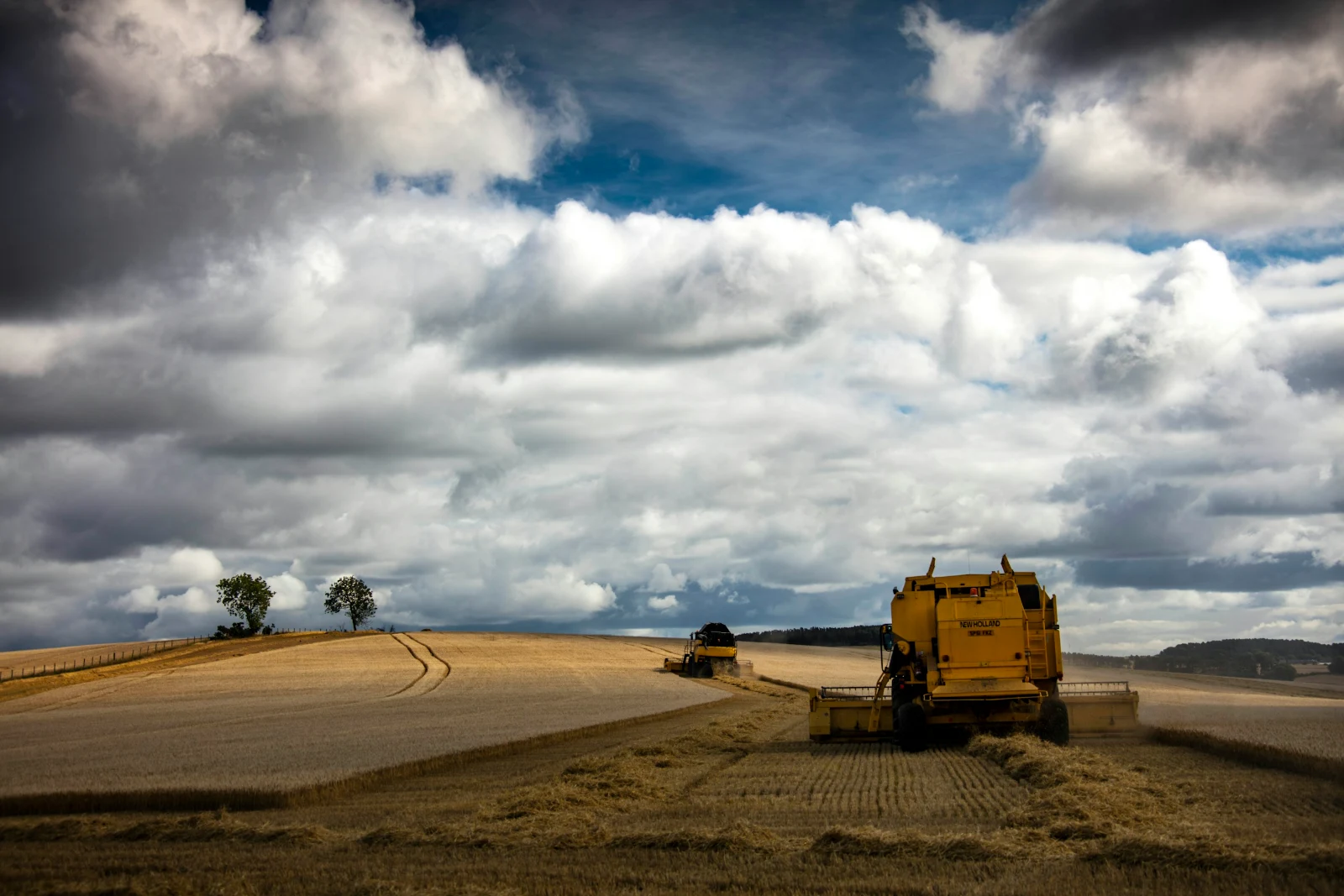
- agricultural machinery, from tractors to combine harvesters, which matters across rural Ayrshire
- CNC machines, presses and other production equipment
- printing, packaging and food-processing lines
"Soft" assets such as IT equipment, office furniture, shop fit-outs or bespoke software are harder to refinance because their resale value falls quickly, so they rarely support much borrowing on their own.
The lender will also check the asset's age, condition, hours or mileage, and how long it has left in working life. The term of the new agreement usually has to finish comfortably before the end of that life. Proof of ownership is essential: original purchase invoices, evidence of payment and, for vehicles, confirmation that no outstanding finance is registered against them.
How much cash can refinancing machinery in Ayrshire release?
The amount depends on the lender's valuation, not on the figure in your fixed asset register. Your accounts show cost less depreciation, which is a tax and accounting figure. A lender is more interested in what the asset would fetch if it had to be sold, and many will instruct an independent valuer for higher-value kit.
Lenders then advance a proportion of that valuation, which varies with the asset type, its age, your trading record and the overall strength of the proposal. There is no single percentage that applies to every case, so be wary of anyone quoting one before they have seen the asset list.
A simple, illustrative example shows how the numbers fit together. Suppose an Ayr civil engineering firm owns three excavators outright, carried in its accounts at a combined £60,000. An independent valuation puts their open-market value at £110,000. A lender would work from the £110,000, not the £60,000, and offer a proportion of it over a term within the machines' remaining life. These figures are hypothetical and are not an offer.
Cost depends on the lender, the asset and your business. Pricing for business borrowing is influenced by wider interest rates: the Bank of England raised Bank Rate to 4% on 5 November 2026 (correct at the time of posting). Ask every lender for the total amount payable, including documentation fees, option-to-purchase fees and any valuation costs, so you can compare like with like.
When asset refinance makes sense, and when it does not
Asset refinance can be a sensible piece of business funding in Ayr when the cash has a clear, productive purpose. Typical examples are:
- funding the working capital for a new contract before the first invoices are paid
- spreading a large VAT, corporation tax or supplier bill over a planned term
- replacing expensive short-term borrowing with a structured agreement
- contributing a deposit towards new equipment or premises
- funding an expansion, such as a second depot or a new product line
It is less suitable where the business is losing money month after month and the cash would only delay a deeper problem. Refinancing essential equipment to cover recurring losses can leave a business with higher outgoings and the same underlying issue. In that situation, a fuller review of cash flow, pricing and overheads usually comes first. Our earlier article on matching working capital finance to the cash-flow gap explains how to diagnose the gap before funding it.
Asset finance in Scotland: what lenders need from you
Asset finance in Scotland follows the same broad principles as elsewhere in the UK, but lenders still want a clear picture of the business behind the equipment. A well-prepared proposal usually includes:
- An asset schedule listing each item's make, model, serial number or registration, year, hours or mileage, and where it is kept.
- Proof of ownership: purchase invoices and evidence of payment, plus settlement figures for anything still on finance.
- The last two years' accounts and recent management accounts, so the lender can see current trading.
- Recent business bank statements, usually three to six months.
- A short cash flow forecast showing what the money will be used for and how the repayments fit.
- A schedule of existing borrowing, including any bank debt, other asset finance and personal guarantees.
Directors may be asked for a personal guarantee, particularly for younger companies. A guarantee is a serious personal commitment and you should take independent legal advice before signing one. If you want to tidy up credit records and paperwork first, our guide to getting your Ayrshire business ready for finance sets out the checks to run before applying.
If you are weighing up new equipment as well as existing kit, our article on choosing business finance in Ayrshire for equipment, cash flow and growth covers buying new assets, whereas this guide focuses only on releasing value from assets you already own.
A numbers-first checklist before you refinance
Before committing, run through these questions with your accountant or broker:
- What exactly is the cash for, and when will it come back into the business?
- Can the business afford the new repayments in a quieter month, not just a busy one?
- Is the term shorter than the asset's remaining working life?
- What is the total amount payable, including all fees?
- Have you checked the capital allowances, balancing charge and VAT position?
- What are the early settlement terms if you need to sell or replace the asset?
- Does any existing lender have a floating charge or restriction that needs its consent?
That last point catches many businesses out. If your bank holds a floating charge over company assets, the new lender may need a letter of non-crystallisation or a waiver before it will release funds. Raising it early avoids delays at the end.
Frequently asked questions
Can I refinance equipment that is still on finance?
Often, yes. If the agreement has been paid down and the asset is worth more than the settlement figure, some lenders will settle the existing agreement and advance a new one, releasing the difference as cash. The original lender's settlement figure and any early settlement charges need to be included in the numbers.
Is sale and leaseback the same as selling the equipment?
Legally, the asset is sold to the finance company, but you keep using it under a lease. You do not lose the equipment from your operations as long as you keep up the rentals and the other terms of the agreement. The tax and accounting effects differ from a hire purchase refinance, so take accounting advice first.
How long does asset refinance take?
It depends on the lender, the number of assets, whether a valuation is needed and how quickly paperwork is supplied. A complete asset schedule, ownership evidence and up-to-date accounts help a lender assess the proposal without repeated requests. No timescale can be promised in advance.
Do you only arrange asset refinance for businesses in Ayr?
No. I work with businesses in Ayr, Kilmarnock, Irvine and the rest of Ayrshire, as well as Glasgow and across Scotland. The principles of refinancing machinery are the same whether the equipment is in Cumnock or Glasgow.
Talk to a commercial finance broker in Kilmarnock and Ayrshire
If your business owns machinery, vehicles or plant and you want to understand whether asset refinance or sale and leaseback could release cash, I can review the asset list and the numbers with you and explain the options that may fit. As a commercial finance broker in Ayrshire with an accountancy background, I will look at the cost, the tax points to raise with your accountant and whether the repayments are realistic.
Send me a short note about the assets and what the funding is for through the contact page, or email catherine@tnfinance.co.uk.
Please note: all rates, tax bands and figures in this article are correct at the time of posting (November 2026) and may change. Please check the current position before making any decision.
Catherine McNiven acts as a commercial finance broker, not a lender. Most commercial mortgages and some forms of business finance are not regulated by the Financial Conduct Authority. Where residential use is involved, the regulatory position can depend on the property, borrower and intended occupation. Your property may be repossessed if you do not keep up repayments on a mortgage or other debt secured against it.