
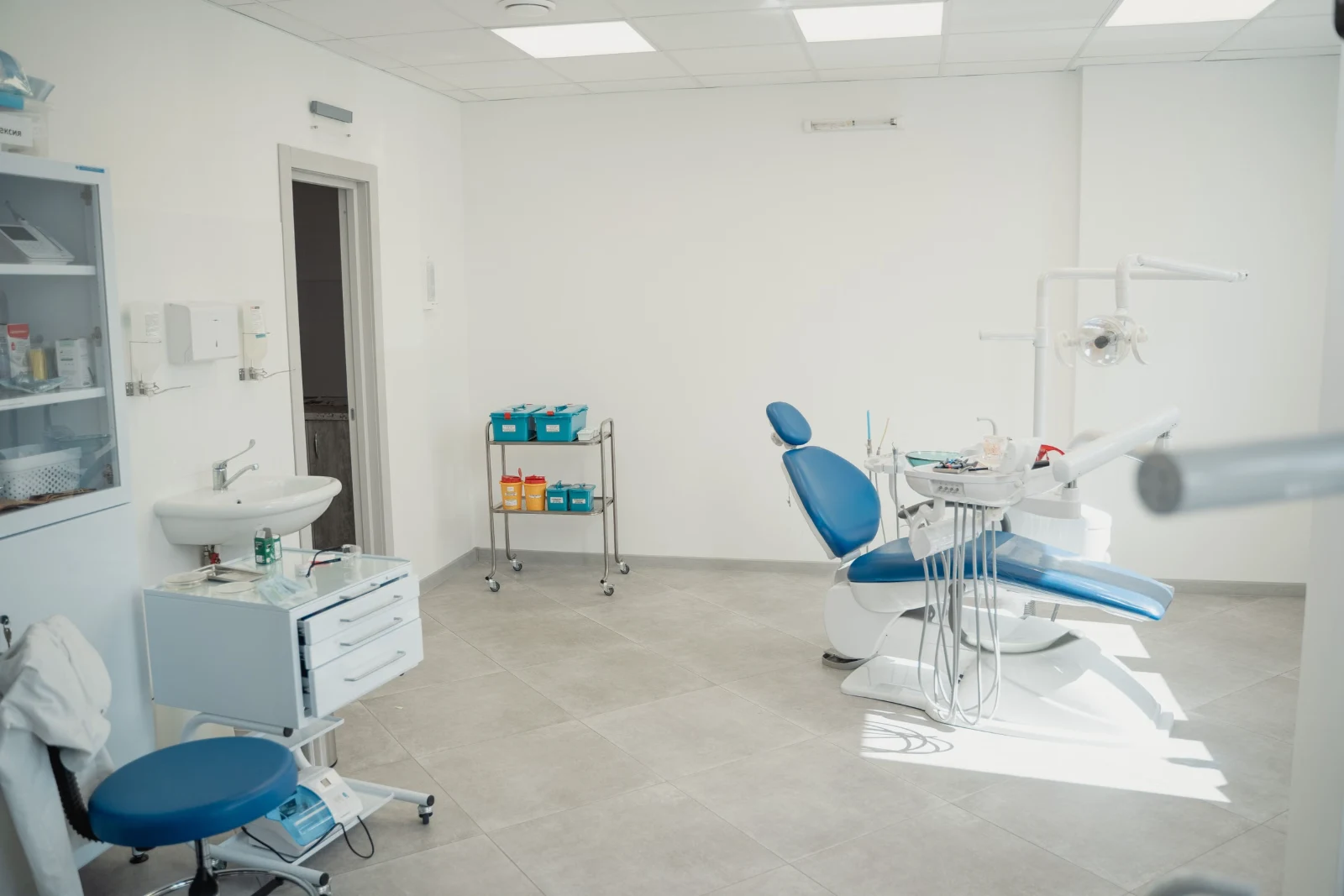
Dentistry is one of the few sectors where a lender is asked to fund a building, a patient list, a room full of specialist equipment and the professional who runs it, often all in the same deal. That is why dental practice finance in Ayrshire needs more planning than a standard commercial loan. Whether you are an associate buying your first practice in Ayr, a principal adding a surgery in Kilmarnock or an owner refitting a practice in Irvine, the lender will look closely at where the income comes from and how secure it is.
After more than 25 years in accountancy, I tend to start where the lender starts: with the numbers. This guide explains how lenders look at a practice, how the different types of finance fit together and what you can prepare before you apply.
Why lenders treat dental practices differently
To most lenders, a dental practice is a trading business that happens to need property, not a property that happens to hold a business. The building may provide security, but the loan is repaid from profits. That changes the questions you will be asked.
Lenders usually want to understand:
- The income mix. How much comes from NHS general dental services, how much from private fees and how much from any patient payment plans.
- The people. Who generates the income, whether associates are staying after a sale and whether the buyer is registered with the General Dental Council.
- Goodwill. How much of the price is for the patient list and reputation rather than bricks, mortar and equipment.
- Regulation. Whether the practice holds the registrations and inspection history it needs to keep trading.
Because the trading history matters so much, many dental practice loans in Scotland are arranged by specialist healthcare teams within lenders rather than general commercial lending teams. Our healthcare finance service is built around that difference.
NHS and private income: what lenders check in Scotland
Scottish dental practices work under different rules from those in England, and lenders who fund in Scotland should understand them. A dentist providing NHS general dental services must be included on the dental list of the local health board, which in Ayrshire is NHS Ayrshire & Arran.
NHS fees in Scotland changed significantly on 1 November 2023, when the Statement of Dental Remuneration (Determination I) was reformed. According to NHS National Services Scotland, the list of items was reduced from over 700 to 45, and courses of treatment opened on or after that date are paid on the new rates (correct at the time of posting, November 2026). If you are buying a practice, ask for accounts and NHS payment schedules that cover periods both before and after the reform, so you and the lender can see how the change affected the practice's income.
Private income brings a separate check. Healthcare Improvement Scotland says that independent clinics providing private dental services must register with it, while practices inspected by their health board because they provide NHS services generally do not need to register as an independent clinic (correct at the time of posting, November 2026). A buyer should confirm which applies, and whether any registration transfers or needs a fresh application under new ownership. A lender will expect that question to have been answered before completion.
A practice with a healthy mix of NHS and private patients may look less exposed to a single source of income. A largely private practice may show strong margins but will be tested on how loyal its patients are and how much depends on one clinician. Neither profile is right or wrong; what matters is that your figures explain it clearly.
Buying a dental practice in Ayr or Kilmarnock
For most first-time buyers, the largest cost is goodwill. If you are buying a dental practice in Ayr, Kilmarnock, Prestwick or Troon, the price will usually be split between goodwill, equipment and fixtures, and, if the building is included, the property itself.
Lenders typically look at:
- A valuation by a specialist healthcare valuer, which tests the goodwill figure against the practice's earnings.
- Three years of accounts and up-to-date management figures, showing gross fees, associate costs, laboratory bills, staff costs and the normalised profit after the seller's own drawings are taken out.
- Your own position: your clinical experience, your plans for the patient list and the deposit you will put in.
- The handover: whether the seller stays on for a period, and whether associates and key staff have agreed to remain.
If the building is part of the deal, buying in Scotland means concluding missives, registering the title with Registers of Scotland and granting the lender a standard security over the property. If the practice is leasehold, the lender will want to see the lease and will usually want enough of the term left to cover the loan comfortably. Under Scots law a lease of commercial premises has to be checked carefully for assignation and landlord consent clauses, so involve your solicitor early.
Property purchases also attract Land and Buildings Transaction Tax. Revenue Scotland's non-residential rates are 0% up to £150,000, 1% from £150,001 to £250,000 and 5% above £250,000 (correct at the time of posting, November 2026). Build this into your budget alongside legal fees, valuation fees and any lender arrangement fee.
If you are an associate looking to own the building you work from, our article on owner-occupied commercial mortgages in Kilmarnock explains how lenders compare buying with renting.
Dental equipment finance and refits
Chairs, imaging, sterilisation equipment, intraoral scanners and practice software can add up quickly. Dental equipment finance spreads that cost over the working life of the equipment rather than taking it from cash reserves or adding it to a long-term property loan.
The common options are:
- Hire purchase, where you own the equipment once the final payment is made.
- Leasing, where you pay to use the equipment and may have options to upgrade or return it at the end of the term.
- Refinance of equipment you already own outright, to release cash for other parts of a project.
Matching the term to the asset is important. A loan running for longer than the equipment is useful leaves you paying for something you have already replaced. Our asset finance page sets out how these structures work, and our guide to business finance in Ayrshire for equipment, cash flow and growth covers how to compare proposals on total cost rather than monthly payment alone.
A full refit, such as reconfiguring the layout, adding a surgery or upgrading decontamination, is closer to a building project. It needs a costed schedule of works, a timetable and a plan for keeping the practice open while work goes on. Our article on light or heavy refurbishment finance in Kilmarnock and Ayrshire explains how staged drawdowns can be matched to the works.
Expanding an existing practice
Growth usually means one of three things: adding surgeries, buying a second practice or moving to larger premises. Each has a different funding shape.
Adding a surgery is mostly an equipment and fit-out cost, and lenders will want to see how the extra chair will be filled, whether by a new associate, a hygienist or a growing private list. Buying a second practice is an acquisition, so everything in the buying section above applies again, along with questions about how you will manage two sites. Moving to larger premises may combine a commercial mortgage, equipment finance and a short period of overlapping costs.
From an accountant's point of view, the key test is simple: after the new borrowing, does the practice still produce enough profit to cover all repayments, your drawings and tax, with room to spare if income dips? Lenders run their own version of this test, and it pays to run it yourself first.
How rates and repayments are worked out
The Bank of England raised Bank Rate to 4% on 5 November 2026 (correct at the time of posting). Many variable-rate business loans are priced as a margin over Bank Rate, so changes feed through to repayments. Fixed-rate options are often available too, at a price.
The margin a lender offers will depend on the strength of the practice's trading, the security available, your deposit and experience, and the overall loan size. There is no standard rate for healthcare finance in Kilmarnock, Ayr or anywhere else, and anyone quoting one before seeing your figures is guessing. What you can control is the quality of the information you provide.
Preparing your dental practice finance application in Ayrshire
A well-prepared proposal tends to save time and questions later. Before applying, gather:
- Three years of practice accounts and recent management accounts
- A breakdown of NHS, private and plan income
- Associate agreements and staff costs
- Details of the premises: title or lease, condition and any planned works
- Equipment lists with ages and any existing finance agreements
- Your personal statement of assets and liabilities, and your GDC registration
- Cash-flow forecasts showing repayments after the new borrowing
It also helps to check your own credit records and any company filings before a lender does. Our guide to getting your Ayrshire business ready for finance walks through the checks worth doing first. As a commercial finance broker based in Kilmarnock and working across Ayrshire, I can review your numbers with you and approach lenders whose criteria suit your practice.
Frequently asked questions
Can I get dental practice finance in Ayrshire without owning the building?
Yes. Many practices are leasehold, and lenders fund the goodwill and equipment instead. They will normally want to review the lease, including the remaining term and any restrictions on assignation, because the practice needs to be able to stay in the premises for the life of the loan.
How much deposit do I need to buy a dental practice?
It varies by lender, the strength of the practice and how much of the price is goodwill. Some healthcare lenders will fund a high proportion of a well-established practice, while others will expect more of your own money. Your trading figures and experience usually matter as much as the deposit.
Does it matter if the practice is mostly NHS or mostly private?
Lenders will fund both, but they assess them differently. NHS income is tested against the current Scottish fee structure, and private income is tested on patient loyalty and how much it depends on individual clinicians. A clear income breakdown helps either way.
Can equipment and property be financed together?
Sometimes, but it is often better to keep them separate so that equipment is repaid over its useful life and the property over a longer term. A broker can help you compare a single facility with a combination of a commercial mortgage and dental equipment finance.
Talk to a commercial finance broker in Kilmarnock about your practice
If you are buying, expanding or refitting a practice anywhere in Ayrshire, from Kilmarnock and Ayr to Irvine, Largs or Cumnock, I can help you set out the numbers and find lenders that understand dentistry. Send me a short note about your plans through the contact page or email catherine@tnfinance.co.uk, and we can talk through the options.
Please note: all rates, tax bands and figures in this article are correct at the time of posting (November 2026) and may change. Please check the current position before making any decision.
Catherine McNiven acts as a commercial finance broker, not a lender. Most commercial mortgages and some forms of business finance are not regulated by the Financial Conduct Authority. Where residential use is involved, the regulatory position can depend on the property, borrower and intended occupation. Your property may be repossessed if you do not keep up repayments on a mortgage or other debt secured against it.