
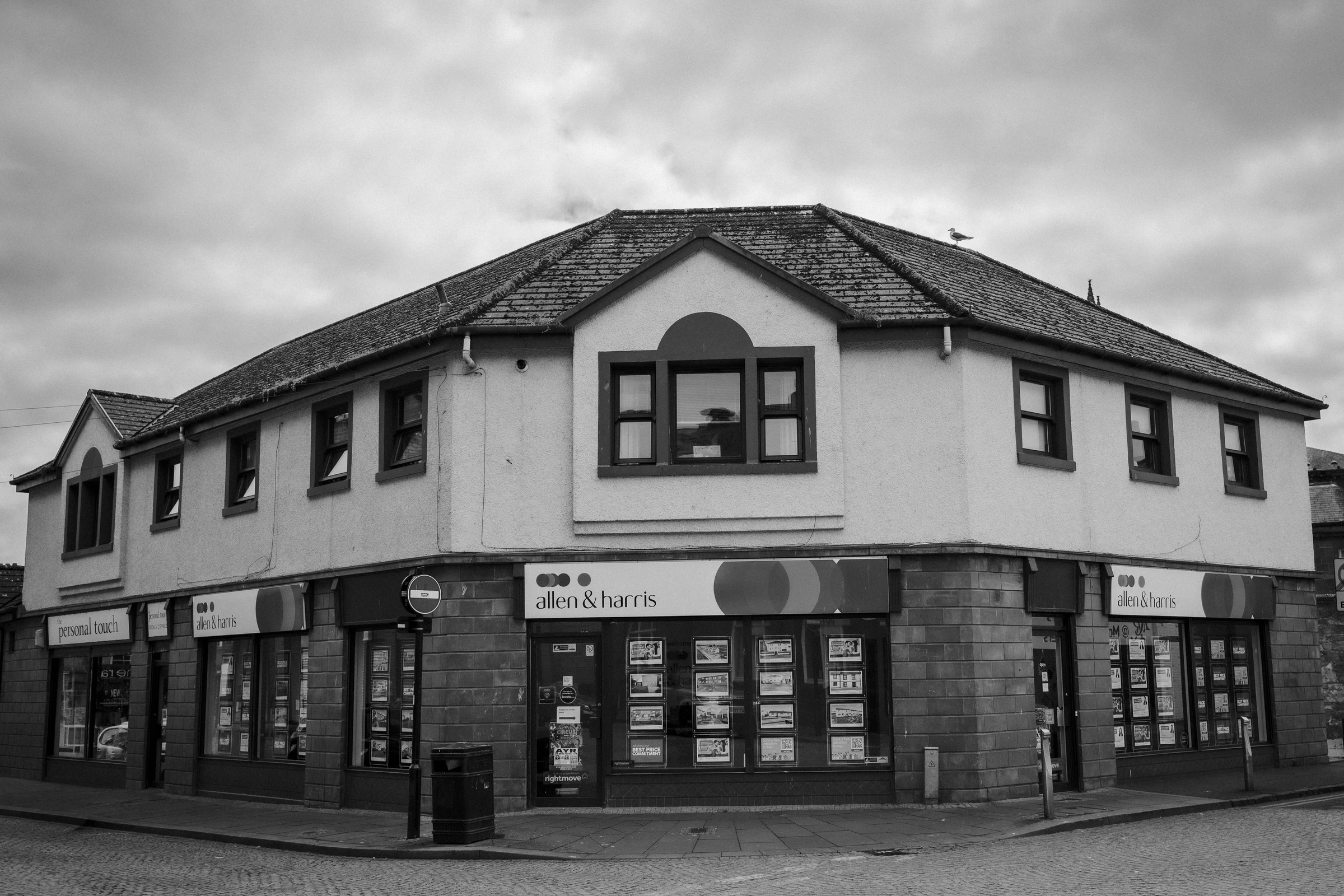
A shop with a flat above is one of the most familiar buildings on any Scottish high street, and Ayr has plenty of them. They appeal to owner-operators who want to trade downstairs and let the flat, and to investors who like two income streams under one roof. Financing one, though, sits between two worlds. A semi commercial mortgage in Ayr is assessed partly like a commercial loan and partly like a residential one, and the way a lender splits the building can decide how much you can borrow.
With more than 25 years in accountancy behind me, I look at these deals through the income and the numbers first. This guide explains how lenders treat mixed use property finance in Ayrshire, the Scottish tax and legal points to plan for, and how to prepare a proposal that a lender can understand quickly.
What is a semi commercial mortgage in Ayr?
A semi-commercial (or mixed-use) mortgage is a loan secured on a property that has both commercial and residential parts. The classic example is a shop with a flat mortgage: a ground-floor retail unit with one or two flats on the upper floors. Other examples include a café with a flat above, an office with a maisonette, a pub with owner's accommodation, or a row of units with residential lets behind.
In Ayr, you will find this type of building on and around the High Street, Newmarket Street and Sandgate, as well as in the main streets of Prestwick, Troon, Maybole and Girvan. Similar properties appear in Kilmarnock town centre and throughout the rest of the county.
There are two broad buyer types, and lenders view them differently:
- Investors, who let both the shop and the flat. The lender relies on the combined rental income.
- Owner-occupiers, who trade from the shop and let the flat, or live in the flat themselves. The lender relies on business profits, rental income, or both.
Who will live in the flat matters more than many buyers realise. If the borrower, or a close family member, will live in the residential part, and that part makes up at least 40% of the property, the loan may be a regulated mortgage contract under Financial Conduct Authority rules. That changes the lenders available and the process. Make sure your broker knows your intentions for the flat at the outset.
How lenders split the income on mixed use property finance in Ayrshire
This is where semi-commercial lending differs most from a standard buy-to-let or commercial mortgage. Lenders want to know what each part of the building earns and how secure that income is.
The commercial part
For a let shop, the lender reviews the lease: the rent, the length remaining, any break clauses, who pays for repairs and insurance, and the strength of the tenant. A long lease to an established business is worth far more to a lender than a short or informal arrangement. If the shop is empty, some lenders will value it on an assumed market rent, while others will want it let before they lend. Our guide to how tenants and leases shape a commercial investment mortgage explains what lenders look for in a lease.
The residential part
For the flat, the lender looks at the rent achievable under a private residential tenancy, the condition of the flat and whether it meets letting standards. In Scotland, private landlords must be registered with the local council (South Ayrshire Council for Ayr) and the flat must meet the repairing standard. If you plan to let rooms to three or more unrelated sharers instead, licensing changes the picture; our guide to HMO mortgages in Glasgow explains how lenders treat licensed HMOs. These are not just legal duties; a valuer and lender will expect them to be in order.
Putting it together
Many lenders add the two incomes and test them against the proposed loan repayments, using a rental cover calculation. If the property is one of four or more mortgaged lets, lenders may test rental cover across your whole portfolio, as explained in my guide to portfolio landlord finance in Ayrshire. Some apply different stress tests to each part, or weight the commercial income more cautiously. Where the commercial element is small, some lenders will treat the property more like a residential investment; where it is large, the loan is treated more like a commercial investment. Each lender draws that line differently, which is one reason the same building can attract quite different offers.
A shop let to a solid tenant on a ten-year lease, with a well-kept flat above, is a very different proposition from the same building with an empty unit and a flat that needs work, even if the asking price is the same.
What affects how much you can borrow
Several factors shape the loan to value and terms a lender will offer on a semi-commercial property:
- The commercial-to-residential split, measured by floor area, value or income. Lenders often prefer a meaningful residential element, as flats are usually easier to sell or relet.
- The location and trading position of the shop. A well-placed unit with steady footfall is valued differently from one on a fringe street with several empty units nearby.
- Separate access. A flat with its own front door is usually more lendable than one reached through the shop, because the two parts could be let or sold independently.
- Condition and compliance, including the roof, common parts in a tenement, fire safety and electrical safety in the flat, and energy performance for both parts.
- Your experience as a landlord or business owner, and your wider financial position.
- Title arrangements. Whether the shop and flat sit on one title or separate titles, and how common repairs are shared under the title deeds, both matter to the lender and its solicitor.
Semi commercial mortgages in Scotland are offered by a mix of high street banks, specialist lenders and challenger banks, and their appetite varies over time. Rates are linked to the risk the lender sees and to wider market conditions; the Bank of England held Bank Rate at 3.75% in September 2026, with the next decision due on 5 November 2026 (correct at the time of posting).
LBTT and other costs on a shop with a flat above
Tax on mixed-use purchases in Scotland works differently from England, and it is worth understanding before you make an offer.
- Non-residential rates for the whole purchase. Revenue Scotland treats a purchase of mixed residential and non-residential property as a non-residential transaction. LBTT is calculated on the whole price at non-residential rates: 0% up to £150,000, 1% from £150,001 to £250,000 and 5% above £250,000 (unchanged for 2026-27 as at October 2026).
- Additional Dwelling Supplement (ADS) can still apply to the flat. If the buyer is a company, or an individual who will own more than one dwelling after the purchase, ADS may be due on the part of the price fairly attributable to the flat. ADS has been 8% since 5 December 2024 and generally applies where the dwelling's share of the price is £40,000 or more. The total bill is the non-residential LBTT plus any ADS.
- Other costs include the lender's valuation, legal fees for both the purchase and the loan, lender and broker fees, and any repairs needed to meet letting standards.
As an example of the arithmetic only: on a £250,000 shop and flat, non-residential LBTT would be £1,000. If £100,000 of the price was fairly attributable to the flat and ADS applied, a further £8,000 would be added. Your solicitor will confirm the actual position, as apportionment and exemptions depend on the facts.
The Scottish legal points to plan for
Buying in Ayr follows Scots law, so the process differs from that south of the border:
- Missives. The contract is formed by an exchange of letters between solicitors. Once missives conclude, you are committed, so finance should be agreed in principle before that point.
- Standard security. The lender's security is a standard security registered in the Land Register of Scotland, rather than an English legal charge.
- Tenement rules. Many shops with flats above are in tenement buildings. The title deeds and the Tenements (Scotland) Act 2004 govern how common repairs, such as the roof and stair, are shared and paid for.
- Existing tenancies. If you are buying with tenants in place, the solicitor will check the commercial lease and the residential tenancy agreement, and the lender will want copies.
Refurbishing, refinancing and buying vacant
Older mixed-use buildings often need work: a tired flat, an outdated shopfront, or a roof that has been patched for years. If the property cannot be let as it stands, a standard semi-commercial mortgage may not be available until works are done. Short-term finance can bridge that gap, followed by a longer-term mortgage once both parts are let. Our guides to light or heavy refurbishment finance and bridging loans in Ayrshire explain how to plan the exit before you start.
If you already own a shop with a flat above and the fixed rate is ending, or you want to release equity for another purchase, our numbers-first refinancing guide walks through the review.
Working with a commercial mortgage broker in Ayr
Because lenders split mixed-use income in such different ways, the choice of lender can matter as much as the property. As a commercial mortgage broker covering Ayr, Kilmarnock and the whole of Ayrshire, I start with the figures: the leases, the rents, your accounts if you trade from the shop, and the costs. I then prepare a clear proposal and approach lenders whose criteria suit the building and your plans. A well-presented case for a semi commercial mortgage in Ayr answers the lender's questions about both parts of the building before they are asked.
You can read more about our semi-commercial mortgages service. If the residential side of your portfolio is growing, our residential investment finance page covers buy-to-let and wider property finance.
Frequently asked questions
Can I live in the flat above my shop?
Yes, but it affects the type of mortgage. If you or a close family member will live in the flat and it makes up at least 40% of the property, the loan is likely to be a regulated mortgage contract. Fewer lenders offer these, and the advice process is different, so tell your broker at the outset.
Is a shop with a flat above treated as residential or commercial for LBTT?
Revenue Scotland treats a mixed-use purchase as non-residential, so non-residential LBTT rates apply to the whole price. The Additional Dwelling Supplement can still apply to the part of the price for the flat where the buyer is a company or will own more than one dwelling. Ask your solicitor to confirm.
Will a lender count the rent from an empty shop?
Some lenders will lend on a vacant unit using an assumed market rent, often with a lower loan to value. Others will only lend once a tenant is in place. A shop already let on a sound lease generally gives you more choice of lender.
Do I need landlord experience?
Not always, but it helps. First-time landlords and first-time commercial buyers can find fewer options. Experience in your trade, a sound deposit and well-prepared figures all strengthen a proposal.
Discuss your semi-commercial purchase with Catherine
If you are looking at a shop with a flat above in Ayr, Prestwick, Troon, Kilmarnock or elsewhere in Ayrshire, I can review the figures with you and explain how lenders are likely to view it. Email me at catherine@tnfinance.co.uk with the property details and your plans, or get in touch through the contact page.
Please note: all rates, tax bands and figures in this article are correct at the time of posting (October 2026) and may change. Please check the current position before making any decision.
Catherine McNiven acts as a commercial finance broker, not a lender. Most commercial mortgages and some forms of business finance are not regulated by the Financial Conduct Authority. Where residential use is involved, the regulatory position can depend on the property, borrower and intended occupation. Your property may be repossessed if you do not keep up repayments on a mortgage or other debt secured against it.